Course Content
Chapter 1: Hospitality Industry
Learning Objectives Define hospitality management and its core principles Identify the main sectors within the hospitality industry Understand the nature of hospitality as a service Explain the role of a manager in hospitality Recognize career paths and the importance of practical employment
0/12
Chapter 2: Definitions of Tourism
Learning Objectives Define tourism and its basic components Describe the evolution of tourism from ancient times to today Differentiate between different types of tourism Explain the economic and social importance of tourism Analyze the positive and negative impacts of tourism
0/7
Chapter 3: Meaning of Visitors, Tourists and Excursionists
Learning Objectives Differentiate between a visitor, a tourist, and an excursionist Understand different types of tourists and travelers Explain the primary motivations for why people travel Classify travelers based on their purpose and behavior
0/7
Chapter 4: Lodging – Meeting Guest Needs
Learning Objectives Trace the historical evolution of lodging from ancient times to modern hotels Identify and describe different types of hotel properties Explain how classification systems help guests choose accommodations Understand how lodging in Nepal has evolved to meet diverse guest needs
0/5
Chapter 5: Guest Room
Learning Objectives Identify and describe the different types of hotel rooms Explain the standard placement of guest supplies and amenities in a room Understand the various statuses a guest room can have during daily operations Recognize how room types and amenities cater to different guest needs
0/6
Chapter 6: Hotel and Lodging Operations
Learning Objectives Identify the major functional departments in a hotel Explain the roles and responsibilities of each operational department Understand how different departments work together to serve guests Recognize the structure of hotel operations in a Nepali context
0/5
Protected: Travel and Tourism
0

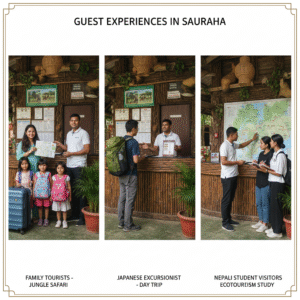
Scenario: A hotel in Sauraha, near Chitwan National Park, has three types of guests checking in on the same day. The first group is a family of four from Bangladesh who are tourists staying for three nights to do jungle safaris. The second is a solo Japanese traveler who is an excursionist; he just wants a place to store his bag for a few hours and have lunch before catching a bus back to Kathmandu in the evening. The third is a group of Nepali university students studying ecotourism, who are visitors on an educational trip. The front desk agent must handle each one differently, offering the family check-in details, the Japanese traveler a safe bag storage option and a lunch menu, and the students information about the park’s entry points.