Course Content
Chapter 1: Hospitality Industry
Learning Objectives Define hospitality management and its core principles Identify the main sectors within the hospitality industry Understand the nature of hospitality as a service Explain the role of a manager in hospitality Recognize career paths and the importance of practical employment
0/12
Chapter 2: Definitions of Tourism
Learning Objectives Define tourism and its basic components Describe the evolution of tourism from ancient times to today Differentiate between different types of tourism Explain the economic and social importance of tourism Analyze the positive and negative impacts of tourism
0/7
Chapter 3: Meaning of Visitors, Tourists and Excursionists
Learning Objectives Differentiate between a visitor, a tourist, and an excursionist Understand different types of tourists and travelers Explain the primary motivations for why people travel Classify travelers based on their purpose and behavior
0/7
Chapter 4: Lodging – Meeting Guest Needs
Learning Objectives Trace the historical evolution of lodging from ancient times to modern hotels Identify and describe different types of hotel properties Explain how classification systems help guests choose accommodations Understand how lodging in Nepal has evolved to meet diverse guest needs
0/5
Chapter 5: Guest Room
Learning Objectives Identify and describe the different types of hotel rooms Explain the standard placement of guest supplies and amenities in a room Understand the various statuses a guest room can have during daily operations Recognize how room types and amenities cater to different guest needs
0/6
Chapter 6: Hotel and Lodging Operations
Learning Objectives Identify the major functional departments in a hotel Explain the roles and responsibilities of each operational department Understand how different departments work together to serve guests Recognize the structure of hotel operations in a Nepali context
0/5
Protected: Travel and Tourism
0

Introduction
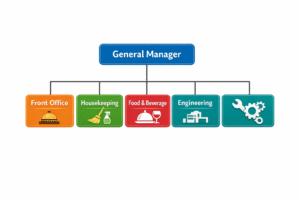
A hotel is like a small city. To run smoothly and provide guests with everything they need, it is organized into different departments, each with a specific function. Some departments interact with guests face-to-face, while others work behind the scenes. For a hotel to be successful, all these departments must coordinate and communicate effectively. This chapter will introduce you to the main functional and operational departments you will find in a hotel, especially in the context of Nepal’s hospitality industry.


Major Functional Departments
Hotels are typically divided into two main functional areas: the Front of the House and the Back of the House. This division helps organize the workflow and ensures that guest-facing areas are presented perfectly.

  • Front of the House: These are the departments and areas that guests see and interact with directly. The atmosphere here must be welcoming, professional, and immaculate.

    • Examples: The Lobby, Front Desk, Concierge, Restaurants and Bars, Swimming Pool, Fitness Center, and Banquet Halls.

    • Focus: Guest interaction, service delivery, and creating a positive first and last impression.


  • Back of the House: These are the operational areas that guests typically do not see. This is where the behind-the-scenes work happens to support the front-of-house teams. While guests don’t see these areas, their condition directly impacts the quality of service.

    • Examples: The Kitchen, Laundry, Engineering/Maintenance Workshop, Housekeeping Storage Rooms, Administrative Offices, and Receiving Areas.

    • Focus: Support, production, maintenance, and administration.