Back to: Evolution of Lodging
Introduction
Lodging is one of the oldest and most essential parts of the hospitality industry. At its core, it is about providing a safe and comfortable place for travelers to rest. From a simple shelter to a luxurious resort, the basic need remains the same. This chapter will explore how lodging has evolved over time and the different types of properties that exist today to meet the varied needs of guests, with a special look at Nepal’s unique accommodation landscape.
Evolution of Lodging
The concept of lodging is as old as travel itself. As people began to move for trade, religion, or war, the need for a place to stay arose. The history of lodging shows a gradual shift from basic necessity to a complex industry focused on experience and service.
-
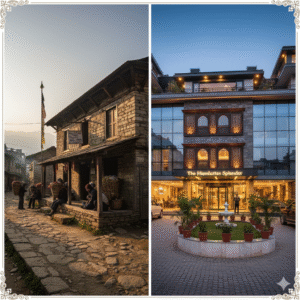
Ancient Times: The first forms of lodging were very basic. Inns and taverns appeared along trade routes, like the ancient salt trade routes in the Himalayas. Pilgrimage sites like Lumbini and Muktinath also had simple rest houses or dharamshalas for travelers. These offered little more than a roof and a simple meal.
-
The Middle Ages: Monasteries and religious orders often provided free lodging to travelers. In Nepal, similar concepts existed with “patis” (public rest houses) found in village squares and along trails.
-
The Grand Era (18th-19th Century): The concept of luxury began to emerge in Europe with grand hotels for the wealthy. In Nepal, this period saw the construction of grand palaces by the Rana rulers, some of which are now heritage hotels.
-
The Modern Age (20th Century Onwards): The rise of commercial air travel led to a boom in hotel construction worldwide. In Nepal, after 1950, the first modern hotels were built in Kathmandu to cater to diplomats, mountaineers, and the first wave of tourists. This era saw the birth of international hotel chains and a focus on standardization.
-
The Experience Economy (21st Century): Today, lodging is about more than just a bed. Guests seek unique experiences. This has led to the rise of boutique hotels, eco-lodges, and luxury homestays in Nepal, offering personalized service and a deep connection to the local culture and environment.