Course Content
Chapter 1: Hospitality Industry
Learning Objectives Define hospitality management and its core principles Identify the main sectors within the hospitality industry Understand the nature of hospitality as a service Explain the role of a manager in hospitality Recognize career paths and the importance of practical employment
0/12
Chapter 2: Definitions of Tourism
Learning Objectives Define tourism and its basic components Describe the evolution of tourism from ancient times to today Differentiate between different types of tourism Explain the economic and social importance of tourism Analyze the positive and negative impacts of tourism
0/7
Chapter 3: Meaning of Visitors, Tourists and Excursionists
Learning Objectives Differentiate between a visitor, a tourist, and an excursionist Understand different types of tourists and travelers Explain the primary motivations for why people travel Classify travelers based on their purpose and behavior
0/7
Chapter 4: Lodging – Meeting Guest Needs
Learning Objectives Trace the historical evolution of lodging from ancient times to modern hotels Identify and describe different types of hotel properties Explain how classification systems help guests choose accommodations Understand how lodging in Nepal has evolved to meet diverse guest needs
0/5
Chapter 5: Guest Room
Learning Objectives Identify and describe the different types of hotel rooms Explain the standard placement of guest supplies and amenities in a room Understand the various statuses a guest room can have during daily operations Recognize how room types and amenities cater to different guest needs
0/6
Chapter 6: Hotel and Lodging Operations
Learning Objectives Identify the major functional departments in a hotel Explain the roles and responsibilities of each operational department Understand how different departments work together to serve guests Recognize the structure of hotel operations in a Nepali context
0/5
Protected: Travel and Tourism
0

Real Nepal Hospitality Example

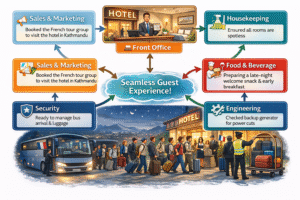
Scenario: A large group of French tourists is arriving at a hotel in Kathmandu late at night. The Sales and Marketing team originally booked the group. The Front Office is prepared with their room keys and check-in documents. The Housekeeping department has ensured all their rooms are spotless. The Food and Beverage team is preparing a late-night welcome snack and will have an early breakfast ready for them before their sightseeing starts. The Engineering team has checked the backup generators to ensure no power cuts disrupt their sleep. The Security team is ready to manage the arrival of the bus and the guests’ luggage. For this group to have a great experience, all these operational departments must work together seamlessly.