Back to: Concept and Meaning of Visitors, Tourism, and Excursionists
Introduction
In the tourism industry, we use specific terms to describe the people we serve. While we often call everyone a “tourist,” there are important distinctions. Is someone just passing through? Are they staying overnight? Are they traveling for business or pleasure? Understanding these definitions helps businesses, governments, and organizations measure tourism accurately and tailor their services. This chapter will clarify these key terms, using examples from Nepal.
Concept and Meaning of Visitors
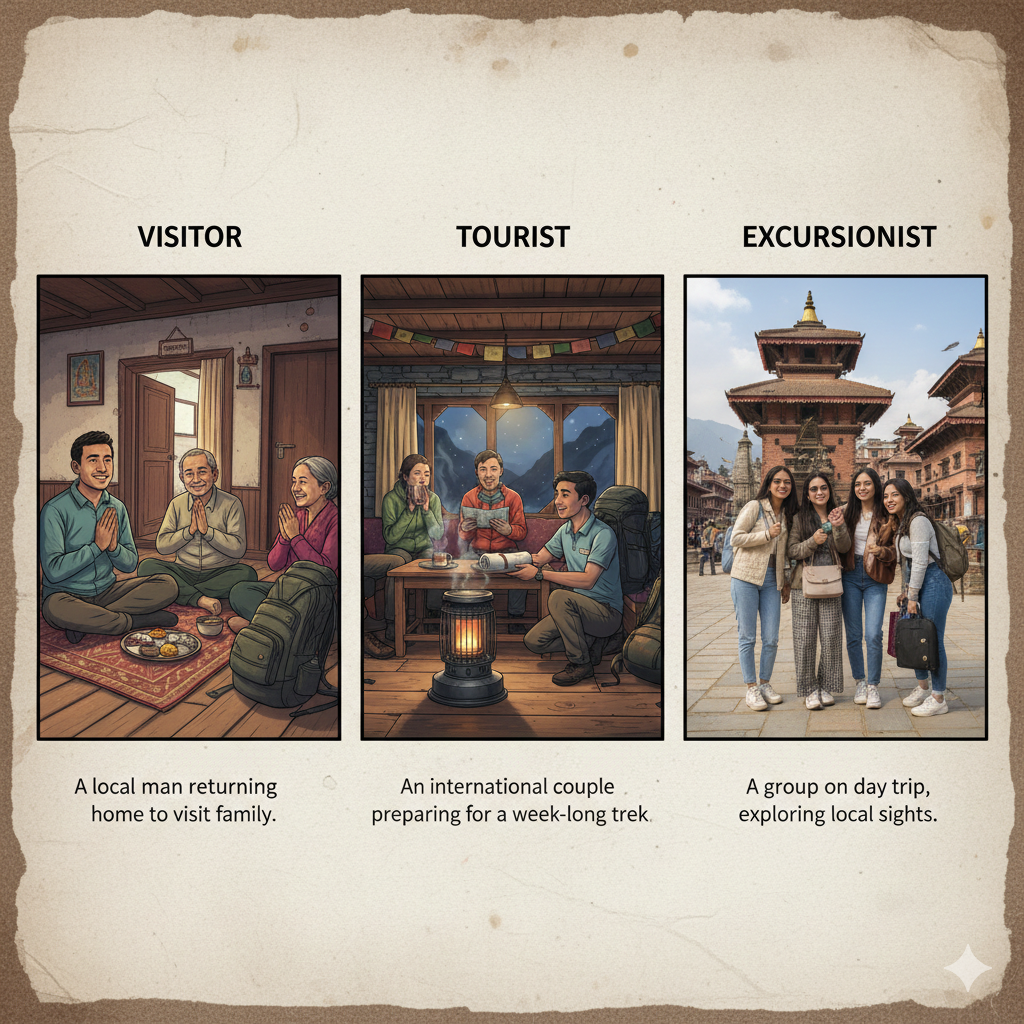
A visitor is a person who is traveling to a place that is not their usual environment. This is the broadest term. It includes anyone who is on the move for less than 12 months, for any main purpose that is not to be employed by a resident entity in the place visited. So, a visitor could be on holiday, on business, or visiting family.
-
The key is that they are in a place that is not their home.
-
The purpose of their trip is not to work for a local company long-term.
-
Example: An aid worker from the USA who is in Kathmandu for a 6-month project is a visitor. A Japanese student learning Nepali for a year in a language school is also a visitor.
Concept and Meaning of Tourists
A tourist is a specific type of visitor. A visitor becomes a tourist if their trip includes an overnight stay. They must stay at least one night in a hotel, lodge, guesthouse, or other form of accommodation in the place they are visiting. This is the key difference between a tourist and an excursionist.
-
A tourist is a visitor who stays overnight.
-
They contribute significantly to the local economy by paying for accommodation.
-
Example: A group of Indian travelers who stay for two nights at a hotel in Lumbini are tourists. A German trekker who stays in tea houses along the Annapurna Circuit for two weeks is a tourist.
Excursionists
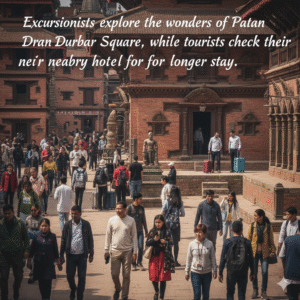
An excursionist (also called a same-day visitor) is a visitor who does not stay overnight in the place they are visiting. They arrive and leave on the same day. They are important for certain types of businesses, like restaurants, cafes, and local transport, but they do not contribute to the accommodation sector.
-
They are same-day visitors.
-
They may spend money on food, souvenirs, and local guides.
-
Example: A group of school children from a local village visiting Lumbini for a day trip and returning home in the evening are excursionists. A Nepali family from Hetauda spending the day at a picnic spot in Chitwan, but not staying in a hotel, are excursionists.