Back to: Introduction
Tourism is one of the world’s largest industries. It involves people traveling to and staying in places outside their usual environment for leisure, business, or other purposes. For a country like Nepal, tourism is not just an industry; it is a major source of income, employment, and cultural pride. This chapter will explore what tourism is, how it has developed, and why it matters so much to us.
Components of Tourism
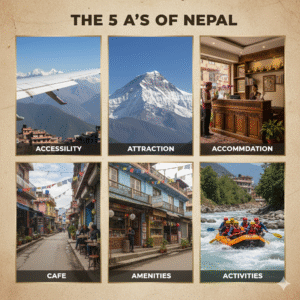
To understand tourism, it’s helpful to look at its basic building blocks. These are often called the “5 A’s of Tourism,” and they are essential for any destination to be successful, from a small village to a big city.
-
Attraction: This is what brings people to a place. In Nepal, this includes natural attractions like Mount Everest and Phewa Lake, and cultural attractions like Pashupatinath Temple and Lumbini.
-
Accessibility: How do tourists get there? This refers to transportation like flights, roads, and vehicles. For example, the drive from Kathmandu to Pokhara or a flight to Lukla for Everest trekkers.
-
Accommodation: Where do they stay? This ranges from tea houses and homestays in rural areas to luxury hotels in cities.
-
Amenities: What facilities are available? This includes restaurants, shops, banks, and communication services that tourists need during their stay.
-
Activities: What can they do? This includes trekking, sightseeing, jungle safaris, white-water rafting, and experiencing local culture.